Slaughterhouse-Five (1972)
Men will literally jump across time before going to therapy.

This month I’m gonna write about literary adaptations from the 1960’s and 1970’s.
Slaughterhouse-Five is a 1972 American comedy/drama/science fiction/military/satirical film (phew) directed by George Roy Hill. It is an adaptation of the 1969 novel of the same name by Kurt Vonnegut.
Billy Pilgrim has become unstuck in time. We see the story of his life in fractured, out of sequence vignettes; His time as a POW in WWII, where he survived the firebombing of Dresden, his flourishing optometry business, the time he survived a plane crash, and when he gets abducted by aliens. We experience him jumping from his past, his present and his future.
“All he does in his sleep is quit, surrender and apologize. I could carve a better man out of a banana.”
-Prof. Rumfoord
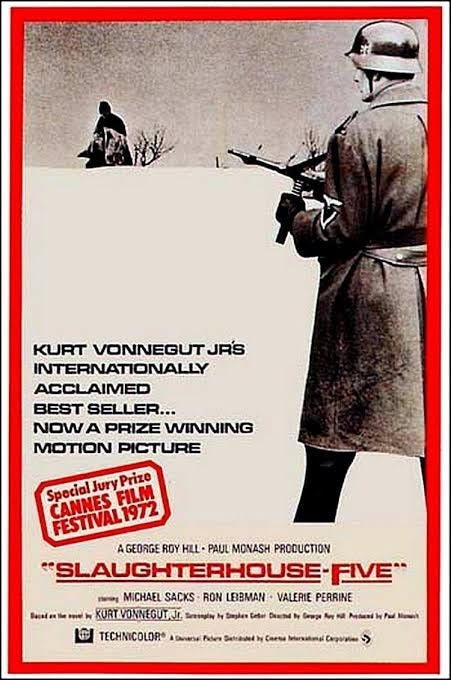
This is a really underrated movie, and a surprisingly good adaptation of the novel. It’s not perfect. The novel has so many other moving parts, and elements that would be impossible to fit in a film that’s only 100 minutes long. They really just streamline it by focusing on Billy’s temporal crisis, and specifically dealing with his PTSD.
The first time I tried to read Slaughterhouse-Five was when I was too young to appreciate it. I was in middle school, and it was so dense I could not get my head around it. Cut to college and I’m reading it specifically because I was going through Vonnegut’s work. I had just read Cat’s Cradle and Player Piano and loved both of them, so I decided to give S-F another try. Today my favorite novels gravitate around Solaris by Stanislaw Lem, Strangers on a Train by Patricia Highsmith or Slaughterhouse-Five by Kurt Vonnegut, depending on the day you’re talking to me.
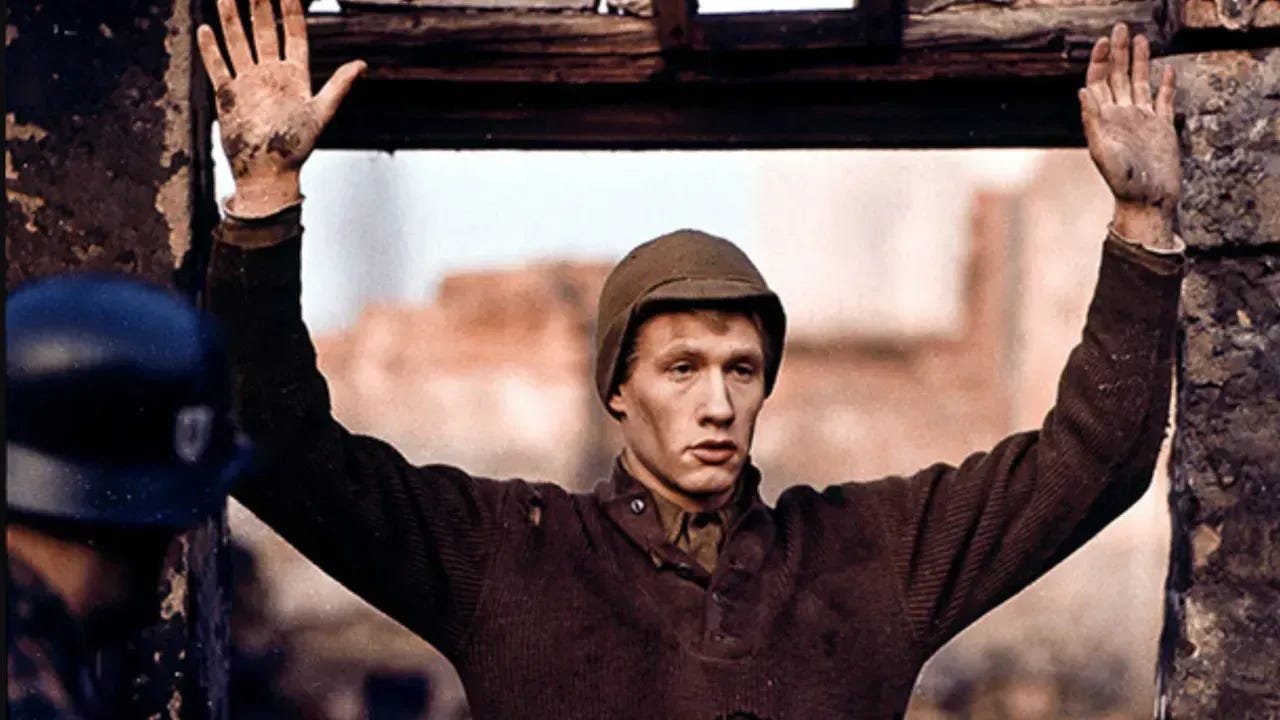
The thing the movie adapts best from the novel is giving the audience the disorienting feeling of time jumping from Billy’s perspective. It’s maybe the best visualization of trauma that I’ve seen in a movie. That feeling of not being present in your current surroundings, your mind being stuck reliving the worst moments of your life, experiencing your past and your present all at once. One example of this is when, in the movie, they show Billy being apprehended by the Nazis, and they’re taking his photo to be like “look at all these hostages we caught” and they intercut footage of him later in his life, having his photo taken with his family to celebrate his optometry practice officially open for business. He might be posing for a picture with his wife and kids, but he is also in those barracks being tortured years earlier.
George Roy Hill is probably best remembered for directing Butch Cassidy and the Sundance Kid, starring Robert Redford and Paul Newman in 1969. It won 4 Academy Awards; best original screenplay, best cinematography, best original score and best song (Raindrops Keep Fallin’ On My Head).
Slaughterhouse-Five was Hill’s follow up to Butch & Sundance. It won the grand jury prize at the 25th annual Cannes Film Festival, and was nominated for the Palme d’Or. I’ve always been really curious as to why this was never embraced as a great movie. It’s not held in high regard like One Flew Over the Cuckoo’s Nest or Network.
This was Hill’s blank check film after making one of the most beloved movies with two majorly beloved movie stars and he could have had anyone he wanted to be in the movie, which brings me to my theory as to why this movie isn’t better remembered or held up to the other great films of the 70’s; it doesn’t have any stars. The cast is great, and there are many stand out performances, like Ron Liebman as the maniacal Lazzaro or Eugene Roche as Derby.
The lead actor playing Billy Pilgrim is Michael Sacks and… gah, I’m sorry but he’s just not a leading actor. I don’t think you need a star for this role, but Michael Sacks just doesn’t have that charisma you need to lead a movie. There is a genuine sweetness to his performance, which you do need because that’s who Billy Pilgrim is in the book, but I just don’t get the interiority of what the character is going through, mostly because I just don’t care about Michael Sacks.
Who was a young actor in 1972 who could play the same character in very different phases in his life? Who could have pulled it off better at the time? It’s a tough role for an actor. Maybe Sacks had the best audition.
Kurt Vonnegut loved this movie. He was quoted to have said “I drool and cackle every time I watch that film, because it is so harmonious with what I felt when I wrote the book.” That’s a pretty great quote to have about your own work.
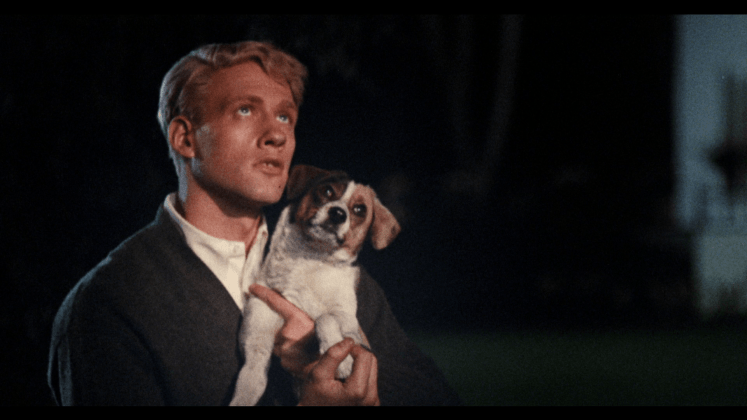
This is another movie where the only consistent love Billy has in his life after the war that seems genuine is for his dog, Spot.